Epidemic Of Loneliness: An Essay.

Introduction

It’s a cold and drizzly afternoon when I’m making a casual stroll around the block with my mom’s dog. Through my hazy spectacles I scan the environment. I notice that the scenery of the neighborhood is rather Dutch; the yards of inhabitants are sharply separated from each other by wooden hurdles. Territories seem to be marked strictly. Every garden is personalized by different types of plants or decorations, like miniature windmills or small Buddha’s. Some of the yards have printed canvases hanging down the wall, depicting tropical shores of exotic lands. Sadly enough, some tarnished images of palm trees won’t improve the cheerless ambiance of today. 

On the background, I observe an indistinguishable row of modest red brick apartments. Housing of this kind can be found all over the Netherlands.  All homes have typically large windows, sometimes exposing the lives indoors. A young family can be seen, preparing for dinner. And further down the lane, a young man’s face is lit up brightly by the screen of his computer. He seems to be playing some sort of video game. And from certainly every second house’s windowsill, the dog and I are stared down by a drowsy cat. 

Light rain is multiplying the bitter feelings of coldness on this quite unwelcoming day. The first part of the walk leads along a gritty building. It might be a large retirement home, or perhaps a block of serviced apartments. Then, the pathway leads towards a downtrodden field, ideal to play catch with the dog. I’ve been walking this route countless times already. 

Over time, I started to notice something peculiar about this mysterious building. During every walk, there’s an elderly lady sitting in her living room, staring out of her large window into the distance. It’s a returning scene whenever I pass by. Whether it’s evening or afternoon, one could always expect her to be unaccompanied, sitting right there on the couch. Usually it’s quite a discomforting picture altogether. Especially on days like this, when the surroundings are pretty much shrouded in despair.

While the dog is far ahead and already chasing carelessly after some neighbourhood cats, the window of the lady appears. Feelings of curiosity take hold of me. Cheekily, I peek inside once again, but things are unchanged. She is still there, but doesn’t seem to notice me. Or she doesn’t bother, who will tell.

She must be somewhere around seventy. Her haircut is characteristically Dutch; well maintained and short. The humble living room is weakly lit by the glow of an antique lamp in the corner. As with other Dutch homes, her tiny front garden is sharply divided from others by wooden fences. In the living spaces surrounding the premises, I see people of a similar age. One level up, a bald man is reading a newspaper, right above the woman. It is evident that every inhabitant has an enormous amount of privacy. Upon hearing the dog’s impatient barking in the distance, I set off to the field, leaving the building behind. 

Meanwhile in my mind, a train of thoughts comes into motion, resulting in some solicitous questions. What had happened to her family? Where are her friends or acquaintances? Perhaps she’d lost all loved ones and has been grieving ever since. But that’s all sheer unlikely.

Of a sudden (while throwing a big twig for the dog to catch), I come to a more appalling conclusion. That it may be more plausible that she actually has family and relatives, possibly lots of them. But they have, apart from an occasional Sunday visit, forgotten of her. She had become too much of a burden and been sent to this grim place to spend the final years of her life. 

Whatever the specific reason for her solitude might be, she’s always alone. Whenever I pass by. In the morning, afternoon and evening. In the weekend and during holidays. Her joyless face is always apparent. More saddening; her striking case seems to be just the tip of the iceberg. Many other people may find themselves in situations of a similar kind. Citizens of all ages. The wealthy and the poor.

Worrying signals

Lately, a load of disturbing news came in from the Netherlands. And to keep it polite, it made my eyebrows wrinkle. It’s the kind of news that appeals to me greatly, for it is on an individual level. The level which, in essence, really matters. It touches me much more than the upteenth update about the everlasting brexit or another rhetoric tweet by Trump. The items in question generally state that in addition to the elderly, also young adults in the Netherlands are now suffering from severe loneliness. Added up, that’s pretty much our whole society.  One report stated that to escape their isolation, youngsters seek for refuge by calling out desperately for help, using online platforms such as Twitter and Instagram. Yet as much the news engages me, as little it surprises me. 

Already for several decades, severe loneliness amongst the elderly is a widespread problem in the Netherlands. Unsurprisingly, signals addressing similar issues arise from neighbouring countries too. So, except roughly middle aged citizens and children, loneliness is fiercely prevalent throughout multiple groups in Western societies. It seems to affect citizens from all layers of society. The ones for whom loneliness is dominating life, have told that they experience social exclusion. For them, the absence of contacts or community often results in an agonizing depression and an overall feeling of dismay. 

The most alarming signs have emerged mostly in the past years towards the upper echelons of publicity, but the process wherein loneliness became an undeniable problem was already unfolding for years beforehand. Perhaps for fifty years already. Over time, loneliness became a symptom, or more precisely, an inextricable characteristic of our society. It became integrated into our capitalistic system. Therefore, what is being covered in news reports right now, barely surprises me. As a social worker and as a citizen.

Yet what does, is that loneliness and all of its dismantling consequences had been noticed so late by the involved institutions. How could it be, for goodness sake, that people in such an (acclaimed) wealthy and socially developed country like the Netherlands have to scream out for help? In what follows, I shall make an attempt on describing some of its main causes. To do so, I use my experiences of living in Russia as a counterweight. The interesting comparison with this ice cold and gigantic country will promise to give some heartwarming outcomes.   

Scattered community

I have had the privilege to live in provincial Russia for a while. It was a privilege, but not specifically because of its breathtaking architecture or astounding wealthiness: less material wealth is the reason for many Dutch to make fun of former soviet countries. And that is slightly presumptive, since in the Netherlands, we have enough troubles ourselves, though masked by cultural blindness. The privilege I had living in Russia revolves more explicitly around unmissable emotional aspects, rather than a large home or expensive cars. 

My small country is considered to be rather progressive and tolerant when described by foreigners. It is listed as ‘very high’ on the human development index. In Russia or Ukraine, I often get jealous looks when telling I’m from the Netherlands. If we could exchange passports, they’d be definitely up for it. Furthermore, the economy is seen as prosperous, with the Netherlands ranking relatively high on most global scales, ‘beating’ states like Switzerland, Singapore and Turkey. 

Overall, the living conditions in the Netherlands are regarded as pleasant and comfortable. Even when annual happiness researches are conducted by the authorities, the outcomes are that Dutch citizens are ‘generally satisfied’ with their lives. (note: such results expose painfully precise the weaknesses of statistical surveys in order to understand the flaws of an entire society. They reveal a lot, yet they don’t reveal anything.) 

Provincial Russia obviously proved to be totally different. Perhaps it’s even the last place where Westerners would search for human warmth. But living in a place that opposes my own culture in so many ways, stimulated me to shift perspectives on my home country the Netherlands.

As if igniting a torch in a dark cave, residing in Russia denuded quite some poignant social flaws in my home country. Amongst them; some of the causes (and solutions) for our loneliness. Whereas the Netherlands may have the favour of the larger audience when it comes to living comfortably and wealthily, a period of time spending with a Russian family unveiled more and more cracks and holes in the seemingly impregnable upsides of living in the Netherlands.

When I lived in a provincial city in the Ural region, I started to learn many crucial things. But not that much about the Russian as about the Dutch culture. Although Russia surely knows some flaws (which has to do with corruption and annexations), loneliness is, in my experience, not particularly one of them. 

Firstly, because family bonds are much tighter. Privacy and personal space are not considered to be as important as they are in the West. Throughout the gross of Russians there’s a good reason for all this; survival. Life is tough, especially in mid sized industrial cities. And when things get tough, people stick together and help each other. It’s traceable far into Russia’s history.  

Families fulfil psychological basic needs such as human closeness. Often, there is no possibility, other than to share a two bedroom apartment with four or more relatives. Next to these motives for sticking together, it’s also just connected to the Russian culture, which emphasizes the importance of unconditional family bonds. 

Those unconditional family bonds are a noteworthy difference in comparison to the Dutch culture. Especially in practise. The frequency of gatherings of the Russian family appears generally higher from what I’ve seen. This also applies to the intimacy between parents and children after eighteen. And even to the deepness of friend’s connections. Due to the overall harshness of living in Russia, people simply need each other more. 

Deserving friends

How different is it in the Dutch and Western culture, where people tend to rely more on large circles of ‘friends’ but still want their portion of personal space, demanding the best of both worlds. From a psychosocial perspective, this way is more challenging and thus more liable to failure. Quality friend contacts and deep connections are believed to be established chiefly by oneself. This uncriticized fixation on friend circles is even praised by some Dutch anti-loneliness movements, ironically bypassing the importance of family and community. Family support is simply forgotten, as it were. In the Netherlands it’s out of the question that friends are naturally and almost exclusively of enormous importance. 

This mechanism requires excellent social skills. Ideally you would be an assertive person, socially active and capable of establishing quality friendships, partly replacing the need for reconciliation by family. The problem now becomes evident. What if you’re slightly an introvert, and a little shy? What if you are somehow unable to obtain a fulfilling group of ‘friends’ around you? Or, also poignant, when you don’t have the money to participate in social activities and are subsequently too ashamed to admit it?

Normally, a Russian in trouble -such as loneliness- would turn to his or her family in suchlike circumstances, to be resupplied by a feeling of community and closeness. But for many youngsters (and elderly) in the Netherlands it’s the preferred endeavour to be independent and self sustainable. To be able to handle life without needing others too much. It can, for some, be rather shameful to live or stay for a longer period at their parents house after the age of eighteen. But in fact, we always stay dependent on family ties up to a certain degree, functioning as a safety net for unconditional support. You might conclude that the independence ideal went a little out of hand.

I am independent!

I am painfully familiar with this independence-borne loneliness myself. For years I lived in a small studio, where I was deprived of human contact for most of the time. At most, I have seen my neighbours maybe three times in three years. We all lived in our own shell. The obligatory, formal greeting in the corridor formed the peak of our interaction.

A great deal of these years I felt depressed, but its cause was initially unclear. I considered myself to be rather independent and self sustainable, and I regularly attended an evening of drinking beer with friends. On Sundays I would pay visits to my mother. And, I considered myself to be an averagely social person. Whenever trying to explain depressive feelings, I wholeheartedly excluded the possibility of loneliness. Loneliness compelled my life, even without me being aware of it.

Nonetheless, something was nagging me, and I couldn’t get my head around it. When, some years later, I visited a Russian family for the first time, the puzzle pieces started to fall into place. There, in cold Russia, I experienced a communal warmth not often felt in the Netherlands. Witnessing the antithesis of loneliness uncovered that I was suffering from loneliness after all. Most of the foregoing years I had lacked human closeness. In the Netherlands, depression had struck me multiple times and it appeared to be always more or less connected to insufficient social interaction. 

There appeared to be some additional downsides when relying solely on expansive circles of ‘friends’. Most friends are, in contrary to family, interchangeable. Only a fraction of them could be counted as valuable in times of need. On rare occasions, perhaps twice monthly, I would hang out with closer friends who I knew from childhood. But most other ‘friendships’ appeared and disappeared, depending on my own pace of development, interests and (re)location.  For the most part, I gathered with acquaintances on Saturday evenings to have a beer. Likewise, the majority of my social life revolved around meetings of this superficial kind. 

My social role on a peripheral level demanded much of me: to be energetic, funny and sharp all the time. Therefore, whenever I felt slightly unsociable, I started avoiding such gatherings. Paradoxically, avoiding these social activities pulled me down even deeper. Slowly I withdrew from most of them, and depression had swiftly taken hold of me. As a consequence, I also frequented my closer friends less regularly.  

Even though family would be glad to host me for some while, I was too proud to admit that I failed in sustaining a circle of friends. That I failed to be independent. So I kept my mouth shut about it. I was too ashamed to admit that I was actually not that ‘independent’ as I would’ve liked to see myself. It went on like this for months. And these appeared to be the aspects on which loneliness thrives best. 

There are -apart from some extreme cases- no excuses for families to abandon each other, or specific members. Although Dutch families are unlikely to be less loving or forgiving than their foreign counterparts, it is essential that this love and care is being practised more intensively in order to reduce loneliness. Unchallenged independence is a myth. Up to a certain point, we’re all dependent on each other, but the comatose state of comfort in the Netherlands has alienated us from this. 

Russia showed me that grandmother, grandfather, child, father and mother are all interdependent.  The mother takes care of the child, and later on, the child takes care of the mother, and so on. Not as a burden, but as an honour.

Independence may never overshoot towards neglectance. But I suppose that’s what had happened in the Netherlands over the last decades. Friends are of course, for lots of people, profoundly meaningful. But leaning exclusively on the emotional support of friends is walking a slippery slope, as friendships rotate from time to time. Often, friend connections are conditional, where most family bonds can expected to be unconditional. 

Conclusively, it’s worth reminding that like in the Russian province, people are essentially and fundamentally reliant on each other’s help and support, acquired in whichever way. The entire human race is in fact one enormous community, but at the same time segregated by group dynamics, professions and status roles.

As Western societies aimed to produce more material wealth, social roles have dispersed towards required specific job positions and hierarchical statuses, fueling the increased separation. Yet for loneliness and social seclusion to diminish, one must look into the core of human existence. It’s of utmost importance that we are consistently reminded of the fact that we, as humans, are in core essence nothing more than overdeveloped apes: social animals, now yearning for the cohesive community as desired by our deep ancient cores. 

Loneliness for profit

Under these personal and cultural obstacles, lies another tenacious issue. Namely, that  nowadays the economy is seen as something divine. In a dogmatic way. Our tiny, swampy country is drenched in capitalism and economical ambition, often without its ethics being doubted. It would be too shallow to link loneliness to this mere fact, but it might be the driving force behind something closely related to loneliness; individualism. It’s the very notion that the individual rises above the group. And, if misused, that’s toxic for any kind of community.   

Undoubtedly it is a pleasant idea to be able to become the individual you pursue to be. An entirely unique and  autonomous person, distinguished clearly from the masses by clothing, philosophy, hobbies, values, beer brand preferences and so on. In this way, you’re separated from others. But alas, reality is less romantic. 

Individualism is in favour of many companies who’d love to sell their stuff. Individualism and commerce go hand in hand. The more people are separated, the more revenue it will generate for companies. The more people pursue individualism instead of collective goals, the more they will spend on personalized items. It plausibly explains why every family member of an average middle class household owns or pursues to have his or her own car, television, jewelry or a closet filled with an abundance of expensive clothing. 

More precise and strikingly, it’s even in economy’s favour when you’re lonely.  Because you will purchase more products or services as a desperate attempt to compensate or end your fundamental sad state. Online dating platforms such as Tinder flourish on the increased separateness of people. It is in non of their moral concern to actually unite all people, for their business would then be lost. So from a mere moral perspective, the dismissal of Tinder should be their main endeavour. But of course, it isn’t. 

Devouring tons of ice cream, while weeping on the couch to handle a break up is the classic example of this. As is overeating in general, actually. Similarly relevant; the lonely businessman who buys himself a second or third fancy car, or when one is omitting any human contact by ordering a specific pair of earrings on distant Chinese webshops. In a way, it’s all the outcome of loneliness. 

Socially content and emotionally fulfilled people add less to economy, for they are not in need of (luxurious) goods to make up for emotional emptiness such as loneliness. Which, however, doesn’t mean they don’t buy anything at all. Sadly, nowadays’ unlimited possibilities to purchase any thing, only reminds us of the things we’re deprived of. 

The loneliness as experienced today, seems to be merely a side effect of the way Western societies are intentionally organized. Ruling out loneliness is unfortunately not its main priority. It’s the mere collateral damage of capitalism as it is organized today. It’s indeed the high price we pay for overall material wealth.

Politicians and CEO’s perceive loneliness-borne depression mostly as just an another expense. Therefore, these statisticians only measure the revenue loss loneliness inflicts to their companies and economies and consequently free up some millions to lessen it. To them, lonely (and therefore unproductive) people are seen as ‘revenue loss’. Accordingly, they now also became a burden for society, next to being a burden for their family already. The severe pain an agony it creates on an individual level are often overlooked and underestimated by those who run the countries in question. 

In part, the sticky fingers of the market economy can be averted, albeit on an individual level. The number of compensating services and products is enormous, but they will only move you further away from discovering the real problem. When you feel the sudden need to buy something expensive, question yourself where this desire comes from. Whichever void you are suffering of, it is barely of a materialistic kind. The same critical mindset might be useful when needing platforms such as Tinder. Are you genuinely interested in the displayed profiles, or are you just deprived of something in your daily life?

Social media: a maintaining factor. 

In spite of their seemingly limitless possibilities, social media didn’t really enhance the amount of valuable social contacts. Instead of expanding it, our social contacts have simply been relocated to the online world. It seems implausible to me, that I would have less (or much more) friends if I were born in an offline world. The effort we would originally put into meeting new people in real life, has refocused on meeting new people online, for which less effort and less social skills are demanded. You simply press or swipe your screen, in order to get in touch.

Once established, we have borderless accessibility to our existing circle of friends. So borderless that stepping outside this circle has become unnecessary. Overcoming shyness or insecurity is not mandatory anymore, so people who are bound by these characteristics (including me) will have more difficulty creating new physical contacts. Therefore, social media have increased the connectivity with existing friends, but paradoxically decreased chances for making ‘new’ friends. People are increasingly stuck in their own bubble of friends. Or stuck in their bubble of loneliness. And escaping it is harder than ever before. In the case of already socially introvert people (like myself), social media are preserving loneliness stubbornly. 

A prospective

The outcomes of loneliness are not to be underestimated, and have fargoing consequences for society: often it’s the most isolated people who (further) develop severe psychiatric disorders without supervision, causing psychosis and affect states in social situations, sometimes resulting in murder, rape and abuse. Close to my hometown the other day, a man filled his home with gas, eliciting an enormous explosion, killing himself and injuring others. He was a psychiatric patient, living in seclusion. As with ancient tribes, the feeling of being repulsed from the community induces an agony so painful that most of us can hardly bear with it. It’s why bullying or parental neglectance has such extreme effects on the shape of our personality. 

On the frontline of the loneliness battlefield, small scale recreating of communal settings has already begun: on a charity level, cooking classes are organised for anyone interested, board game evenings are held for lonely elderly, and depressed youngsters seek each others proximity through buddy projects. Nonetheless, these are only emergency interventions; temporary field hospitals, set up after the striking epidemic of loneliness, wherein social medics are running to and fro to care for the abundance of ill patients. And mainly the less wealthy parts of this planet possess that vital cure, which we need so badly in the West: Community. 

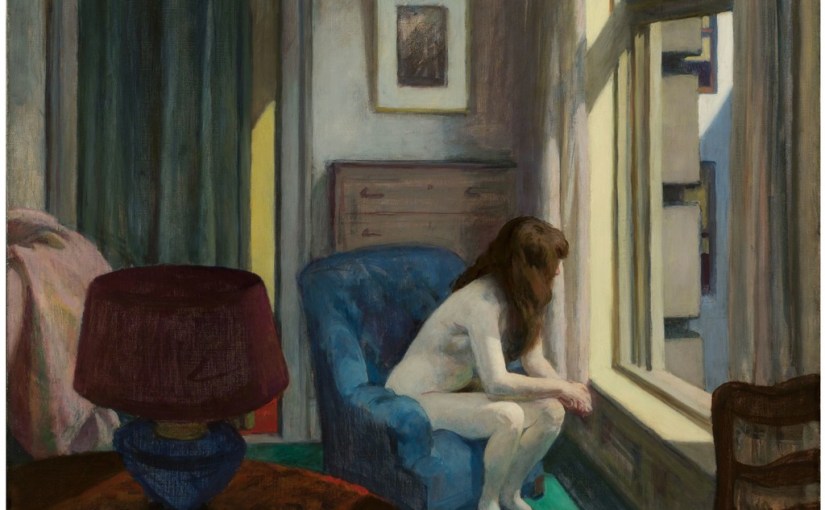
Header image: Eleven A.M., 1926 by Edward Hopper.

© Stefan Hoekstra/The Social Writer, 2020. Unauthorized use/and or duplication of this material without express and written permission from the site’s author and/or owner is strictly prohibited. Excerpts and links may be used, provided that full name and clear credit is given to Stefan Hoekstra and The Social Writer with appropriate and specific direction to the original content.

36 uur in Vietnam

Na de onaardse schoonheid van Ninh Binh, arriveren we in de provinciale stad Tranh Hoa. Terwijl we in een snikheet café al twintig minuten op onze koffie wachten, denken we kort terug aan de imposante en ongewone rotsformaties die we de afgelopen dagen hebben mogen aanschouwen. Een onwerkelijk landschap waarin steile, puntige krijtrotsen worden afgewisseld door uitgestrekte moerassen en groene rijstvelden. Kort bespreken we de pracht van de ondergaande zon, die in slechts enkele minuten achter een rots weggleed. Hoe de Aziatische zon een andere is dan de onze. Vooral de snelheid van het ondergaan en het bijgaande kleurrijke schouwspel is iets wat zich alleen kan manifesteren dichter bij de evenaar, zoals hier in Vietnam. De herinnering aan de dagen in Tam Coc en haar omgeving zullen zich diep in ons geheugen nestelen. De beelden van deze donker oranje gloed zullen op onverwachte momenten, wellicht in Nederland op kantoor, weer eens de gedachten passeren. 

We bevonden ons tijdens het begin van deze reis op het zogeheten bewandelde pad. Vaak namen we prijzige touring bussen, die je in overvloed hebt in Vietnam en uitsluitend door toeristen gebruikt worden. Voornamelijk door stellen van jongere leeftijd, waartoe ook wij behoren. De weg naar Ha Long Bay bijvoorbeeld, verliep op deze manier en was zelfs inclusief boottocht. Het was comfort alom. We hoefden niet veel na te denken en er kwam weinig logistieke planning bij kijken. De gehele rit was er WiFi, dus passagiers hoefden ons ook niet te vervelen of uit het raam te staren. We werden probleemloos van attractie naar attractie gereden, een ogenschijnlijk ideale manier van reizen. Bijkomend pluspunt is dat er in al deze bussen geen Durian geur te bekennen was. Alleen, in onze optiek, werd deze manier van reizen na een poosje een beetje saai. Na de dagen in Tam Coc gooiden we het roer om, en dat hebben we geweten.

Vandaag was een zware, uitputtende dag. Zo’n acht uur voordat we in dit café aankwamen, verlieten we onze comfortabele homestay. Zonder plan of vooraf geboekte bustickets. En dat staat in Vietnam gelijk aan valsspelen. Het wordt er simpelweg niet getolereerd dat je buiten het bewandelde pad om reist. Dat je dure, en met WiFi en airco uitgeruste vervoermiddelen weigert. Je bent een toerist, bent blank en hebt dus een goed gevulde portemonnee voor een exclusieve manier van reizen. Dat is doorgaans de gedachtegang bij zowel de lokale bevolking als bij medetoeristen. En dat is een klevend plakkaat. Het is een kenmerk van een land dat tegelijkertijd bekend én totaal onbekend is met haar toegenomen aantal internationale bezoekers. Op de meetlat van toeristische volwassenheid is Vietnam te vergelijken met een onberekenbare puber, zoekend naar haar identiteit. 

Van dit stigma moesten we ons ontdoen. En het kostte de nodige moeite om niet alsnog de toeristenbus te worden ingedrukt. Na wat noedels voor ontbijt stapten we in een schimmige taxi en werden vervolgens afgezet naast een brandend hete snelweg. Een paar Vietnamese dorpelingen had ons eerder met tegenzin aangeraden een busje aan te houden. En het duurde inderdaad slechts vijf minuten voordat een roestig bestelbusje, uitgerust voor personenvervoer, voor ons stopte. Met vage letters was beschreven dat Tranh Hoa de eindbestemming was. Maar waar precies in deze grote stad, was niet duidelijk. Met het betreden van dit busje, betraden we tegelijkertijd een geheel nieuwe wereld. De airco stond zeker niet hoger dan tien graden. De transitie van 35 graden naar 10, is misschien wel te vergelijken met jezelf opsluiten in een enorme koelkast.

En, er was geschreeuw. Heel veel geschreeuw. In onverstaanbaar Engels probeerden de lokale inzittenden met ons te communiceren. De één vanuit interesse, de ander enigszins chagrijnig. Weer een ander was vooral geïnteresseerd in de schamele inhoud van mijn portemonee. De commotie die ontstond toen we instapten was groot. En dat bleef zo gedurende de gehele rit. Bij het naderen van Tranh Hoa liep het busje langzaam leeg. Een nerveus gevoel begon zich te ontvouwen want dat betekent vaak maar een ding. Namelijk dat de eindbestemming dichtbij is. Al voordat we de buitenwijken van Tranh Hoa hadden bereikt sloeg de chauffeur plotseling af. Na wat gebrekkige communicatie met de chauffeur bleek dat het busje slechts kortstondig op de ringweg zou stoppen, en daarna door zou rijden naar een gehucht ver voorbij de stad.

Uiteindelijk streken we neer op een verlaten tankstation, zo’n tien kilometer van het stadscentrum. Het lag aan een betonnen wirwar van wegen, zoals je die ook wel rondom Europese metropolen ziet. Ouderwets liften of het verkrijgen van ander openbaar vervoer was nagenoeg ondenkbaar. Zodoende waren we genoodzaakt wederom een taxi te raadplegen die ons voor een astronomisch bedrag zou afzetten in het centrum. Ons koppige idee om de toeristenstroom te ontlopen door gebruik te maken van het openbaar vervoer, liep uit op een kleine ramp. Het was een optelsom van het gebrek aan informatie, de onwelwillendheid van op geld beluste Vietnamezen en onze eigen miscalculatie. Niettemin zijn we (enigszins gehavend) aangekomen in Tranh Hoa. Dit is een middelgrote plaats, die niet specifiek ergens om bekend staat, behalve om haar lange wachttijden in koffiehuizen. 

Nachtelijke ontmoetingen

Daar zitten we nu nog steeds te wachten op onze Vietnamese koffie, en op de trein naar Da Nang. Eindelijk. De trein, waar we veel goede verhalen over hebben gehoord. Volgens verschillende bronnen is dit verreweg de meest comfortabele manier van reizen in Vietnam. In tegenstelling tot de infameuze slaapbus wordt de trein bestempeld als veilig. Dat betekent in dit werelddeel doorgaans dat de trein in ieder geval een kleinere kans heeft om in de afgrond te belanden dan de bus.  Bovendien heeft de slaaptrein altijd iets romantisch, met haar knusse cabines en het rijdende restaurant. We zijn er zeker van dat alles vanaf nu beter zal worden. Na een flinke opkikker van de beruchte Vietnamese koffie, lopen we moeiteloos met onze zware bepakking richting het kleine station. Tijdens het kopen van tickets valt de electriciteit een paar keer uit, wat overigens geen ongewoon verschijnsel is in Vietnam. Het is in ieder geval te hopen dat ziekenhuizen van een ander elektriciteitsnetwerk gebruik maken. 

In Vietnam is het haast onmogelijk om te ontsnappen aan speciale ticketprijzen voor ‘buitenlanders’. Wat de lokale bevolking betaalt voor een kaartje is onduidelijk en waarschijnlijk een staatsgeheim. Maar wat wel duidelijk is, is dat de prijs voor een enkeltje naar Da Nang voor toeristen bijna een half Vietnamees maandsalaris kost. We zien onszelf daarom genoodzaakt om in plaats van de bejubelde slaapcabine, een stoel te boeken voor de komende twaalf uur. Na het kopen van de prijzige tickets (met opschrift: buitenlander) haasten we ons naar het platform, want het getoeter van de trein is in de verte te horen. Desondanks duurt het alsnog een kwartier voordat de ploeterende trein het station binnen rolt.  Het zien van de gehavende wagons vaagt in een klap alle hoop op een romantische treinrit weg. 

Enigszins twijfelend betreden we de wereld van de Aziatische spoorwegen, naïef zoekend naar onze stoelnummers en tot vermaak van de grinnikende Vietnamezen in de cabine. Ondanks dat we hier en daar al wat beestjes hebben opgemerkt, gaan we aanvankelijk rustig op onze stoel zitten. De deuren zijn nu gesloten en de trein komt schokkend in beweging totdat de topsnelheid van ongeveer 25 km/h bereikt is. Plots klinkt er een doordringende gil van mijn vriendin. Want naast de Vietnamezen en wij als ‘buitenlanders’, blijkt er nog een derde categorie passagiers mee te reizen naar Da Nang; kakkerlakken. Alle soorten en maten. De komende twaalf uur zitten we opgesloten in een cabine met duizenden kakkerlakken, die voor de Aziaten onzichtbaar lijken te zijn en ongehinderd over alle tafels, stoelen, kussens, benen en hoofden krioelen. De eerste tijd proberen we nog terug te vechten, wederom tot vermaak van de inmiddels schaterende medepassagiers. Maar voor elke geplette kakkerlak komen er drie terug. Na een poosje begint onze vechtlust af te nemen en afgezien van een gefrustreerde slag met de slipper hier en daar, laten we het maar op zijn beloop.

De overige passagiers gaan rustig door met het spelen van bordspellen terwijl zespotige ziekteverspreiders de cabine overnemen. De kalmte die gemanifesteerd wordt door Vietnamezen onder zulke omstandigheden is indrukwekkend. Deze ultieme zen modus wordt nog eens bevestigd als ik een naderende kakkerlak weg tik, en onverhoopt op het hoofd van een slapende juffrouw terechtkomt. Ze verroert geen spier, terwijl de lange voelsprieten haar gezicht aftasten. 

Ontsnappen naar Hue

Omdat het ons niet lukt deze staat van meditatie te bereiken, besluiten we uit te stappen in Hue, zo’n tweehonderd kilometer voor eindbestemming Da Nang. Het kleine kopje Vietnamese koffie houdt ons nog steeds op de been, en zonder enige tekenen van vermoeidheid wandelen we de straten van Hue op. Het is inmiddels dageraad, en de bekende oranje gloed verlicht de horizon, wat bij ons zorgt voor een sterk gevoel van opluchting. Het kost niet veel tijd om erachter te komen dat Hue een stad is van oogstrelende schoonheid. Letterlijk. Want in contrast met de weerzinwekkende trein, lijkt deze stad de belichaming van hygiëne. Vooral in het ochtendgloren is het een genoegen om hier te vertoeven. Het weertype is bovendien aangenamer, met minder luchtvochtigheid en een frisse wind. Na een poosje slenteren horen we rumoer in de verte en volgen het geluid. Kort daarop aanschouwen we de Vietnamese variant op ‘Nederland in beweging’, een opmerkelijke vertoning waarbij honderden ouderen groepsgewijs de dag beginnen, bloedserieus dansend op vergeten krakers uit de jaren tachtig. Een melancholisch aanzicht. 

Snel laten we de bulderende luidsprekers achter ons en starten de helse zoektocht naar een onderkomen. We weten inmiddels dat, wanneer het om hotelbeoordelingen gaat, Vietnamese hotels een aangepaste wijze van interpreteren vereisen. De hotelscore delen door 1,4 volstaat doorgaans om tot een betrouwbaar oordeel te komen. Een Vietnamese 8 is dus in ‘werkelijkheid’ een 5.7. Het nadeel van deze meting is dat er na filteren er slechts een handjevol peperdure accommodaties overblijft, waaronder de lokale Hilton. 

Toch vinden we een goed onderhouden hotel en slaken een zucht van opluchting wanneer we neerploffen op het kakkerlak-loze bed. Al wordt ik diezelfde nacht nog wel een paar keer zwetend wakker, zoekend naar mijn slipper. 

Een bitterzoete nasmaak

Hue verschilt wezenlijk van haar noordelijke tegenhangers zoals Hanoi en Tranh Hoa. Laatstgenoemde zijn steden die je de illusie kunnen geven dat er geen uitweg is. Waar veilig oversteken een topprestatie is. En waar roken mogelijk gezonder is dan lucht inademen. Hue ontbeert het, behalve de eindeloze stroom scooters, aan dit alles. Haar lange, rechte promenades worden afgewisseld door plantrijke parken, gelegen aan wijde voetgangerspaden. Na een verkoelende douche begeven we ons naar de voetgangersstraat. Het is onze eerste kennismaking met het feit dat voetgangers de prioriteit hebben boven lawaaiige scooters en ronkende vrachtwagens. De duizend meter lange wandelstraat is ‘s avonds afgezet met hekken, waardoor rustzoekende toeristen en stedelingen voor even verlost zijn van het toeterende gekkenhuis overdags.

Ook is Hue een toonaangevende studentenstad. En zoals bij veel studentensteden wereldwijd het geval is, betekent dit veel levendigheid en bruisende straten. We slaan de rijen toeristische cafés over en ploffen neer op een terras, volgepakt met zorgeloos ogende studenten. De verdeeldheid tussen reizigers en de lokale bevolking is hier goed zichtbaar. Westerse restaurants zitten halfvol met schuchtere westerlingen die westers eten bestellen. Andere cafés barsten uit elkaar door de honderden luidruchtige Vietnamese studenten. 

Onder het genot van een Saigon Bia’tje, erkennen we beide de ambivalentie van een reis in Vietnam. Nét op het moment dat je gillend terug wil naar Europese standaarden, ontdek je weer een betoverende plek of stad die je van gedachten doet veranderen. En dat zorgt voor een onvoorspelbaarheid die je geboeid houdt. In ons geval zelfs van Hanoi tot aan Ho Chi Minh Stad, waar we na vier weken vaarwel zeggen tegen dit rauwe Aziatische land. 

Opa

Het klinkt misschien clichématig, maar als je een Russische vriendin hebt krijg je de familie er gratis doch verplicht bij. Dit heeft natuurlijk veel voordelen, maar ook zeker nadelen. In Kaliningrad werden deze uitersten nog eens extra benadrukt, want op de dag van aankomst stond de telefoon al roodgloeiend met belletjes van verre (aangetrouwde) tantes en ooms.

Het maakt in Rusland waarschijnlijk niet uit hoeveel tijd je aan familiebezoeken besteedt, het lijken er nooit genoeg te zijn. Ook maakt het niet uit of je ze ooit eerder hebt gezien; familie is familie. Ten tijde van de Sovjetunie zijn veel families versnipperd en verspreid geraakt. Dit kwam bijvoorbeeld doordat de vader werk diende te vervullen in een staatsfabriek, een paar duizend kilometer verderop.

Door de grote afstanden is het mogelijk om in hetzelfde land wonen als je bloedverwanten, zonder ze ooit gezien te hebben. Kortstondige ontmoetingen als peuter tellen niet mee. Omdat veel familie in Kaliningrad woont en wij er toch waren, is het op zijn zachtst gezegd beledigend om niet ‘even’ een dagje langs te komen. Zodoende besloten we even op de koffie te gaan bij een tante. Dit werden uiteindelijk vier dagen. Waarvan er natuurlijk niet één zonder alcohol.

Het hoogtepunt (of dieptepunt) van het bezoek, in termen van alcoholinname, was toen we de opa van mijn vriendin onze condoleances kwamen brengen. Hij had een paar maanden terug zijn vrouw verloren aan een hartstilstand. Opa woont sindsdien alleen in een klein appartementje in een buitenwijk van de stad. Ze zijn 55 jaar getrouwd geweest.

Een duizelingwekkend getal, waar ik me niks bij voor kan stellen. Ik speelde nog in de zandbak toen zij hun 25 jarige jubileum vierden. Je kunt je misschien voorstellen hoe erg ik ernaar uitkeek om op visite te komen bij deze rouwende Rus. Zowel mijn levenservaring als verlieskunde vaardigheden zijn verreweg ontoereikend om deze man enige waardevolle steun te kunnen bieden. Het beloofde een aangrijpende, aangeschoten middag te worden. Ik hield mijn hart vast.

Vanuit ons naïeve idee om een uurtje bij hem op de koffie te gaan, hadden we voor de gelegenheid wat gebakjes meegenomen. Bij aankomst in het kleine appartementje werd echter duidelijk dat opa heel andere plannen voor de daginvulling had. Zonder te glimlachen deed hij open. En in plaats van eerst de meegebrachte koffie met gebak te nuttigen, zette hij een fles wodka neer.

Dit geheel werd aangevuld met blokjes puur varkensvet, droog brood en een wat rauwe ui. Dit is in Rusland vooral bij de oudere generatie een delicatesse (of het enige voorhanden) wanneer er wordt gedronken. Mogelijkerwijs omdat het varkensvet zowaar nog onsmakelijker is dan de wodka. We zaten een poosje in ongemakkelijke stilte.

Nadat de eerste glaasjes wodka en wat stukken rauwe ui waren genuttigd (de varkensvet probeerde ik uit te stellen), verdween opa in een andere kamer. Daar frommelde hij wat in een kast en kwam terug met een oude foto van zijn pas overleden vrouw. Hij vertelde hoe ze elkaar ontmoet hadden toen ze nog tieners waren. Dit was ten tijde van het communisme, ongeveer zestig jaar geleden. Het gesprek viel op sommige momenten stil aan het kleine keukentafeltje, waarna er weer wat wodka werd bijgeschonken.

Of het nou door de alcohol aangewakkerd werd of niet, het was zwaar om te aanschouwen dat hij zijn tranen soms niet kon inhouden. Een ooit zo trotse man, zijn vrouw en daarmee zijn levensdoel ontnomen. Als je nog niet zo goed Russisch spreekt, is het moeilijk om op zulke momenten je medeleven te uiten zonder iets verkeerds of ongemakkelijks te zeggen. Helemaal als je uit beleefdheid stukken varkensvet naar binnen probeert te schrokken.

In zulke gevallen blijkt wodka een goede vriend, vooral omdat je met iedere slok beter Russisch lijkt te kunnen spreken. Zelfs de eigenaardige borrelsnacks leken door de alcohol even niet naar rubber te smaken. Dit maakt de interessante voedselkeuze van Russen wellicht wat begrijpelijker. De tijd begon te vliegen want plotseling waren we 2 uur verder en de fles was leeg. Met veel moeite voorkwamen we dat er een nieuwe werd geopend.

We besloten in beschonken toestand wat fotoalbums te bekijken met begeleidende woorden van opa. Het besef kwam op kortstondige momenten dat ik me eigenlijk in een tamelijk surrealistische situatie bevond; Op een snikhete middag stomdronken door fotoalbums van een rouwende oud-sovjet gediende bladeren, begeleid door hier en daar een (halfbakken Russisch) woord van medeleven.

De ervaring leert dat verzetten tegen de wodka doorgaans geen zin heeft, vooral niet bij een eerste ontmoeting. Misschien is het met wat slimmigheidjes echter mogelijk de schade beperkt te houden, ook al is me dat deze keer wederom niet gelukt. 

Van links naar rechts: Opa’s zoon, Ik, Opa.

© Stefan Hoekstra/The Social Writer, 2019. Unauthorized use/and or duplication of this material without express and written permission from the site’s author and/or owner is strictly prohibited. Excerpts and links may be used, provided that full name and clear credit is given to Stefan Hoekstra and The Social Writer with appropriate and specific direction to the original content.     

The Dutch Eye

Being abroad a lot, one can easily forget his roots. Recently, an enormous building had been opened in the centre of Groningen, my idyllic hometown in the north of the Netherlands. Located on its upper floor, there’s a fine cafe which offers spectacular views over the city and beyond. 

The average Italian or a Frenchman would be lyrical about the scenery. Romantic thinkers like them would be lost for words when trying to describe the aesthetics of the view.

From above, the Frenchman would perhaps notice the melancholy of Dutch weather, and the Italian would be besieging an adherent with a monologue on the town’s architectural elegance. And they’d both surely daydream how Caspar David Friedrich or van Gogh would colorize these urban landscapes. For them, aestheticism clearly comes first.

With a similar attitude, I was sitting in the cafe the other day, taking in the view and gazing over the city, giving my mind some rest while inhaling some renewed inspiration.

The spot was ideal. My table adjoined a large window, looking out across the southern part of the city.  As seen from there, the panorama was a colourful blend of red, pantile roofs and gothic church towers, contrasting against a backdrop of modern apartment blocks and offices. The finishing touch were darkened clouds that hovered above pastures far beyond the city’s bounds. 

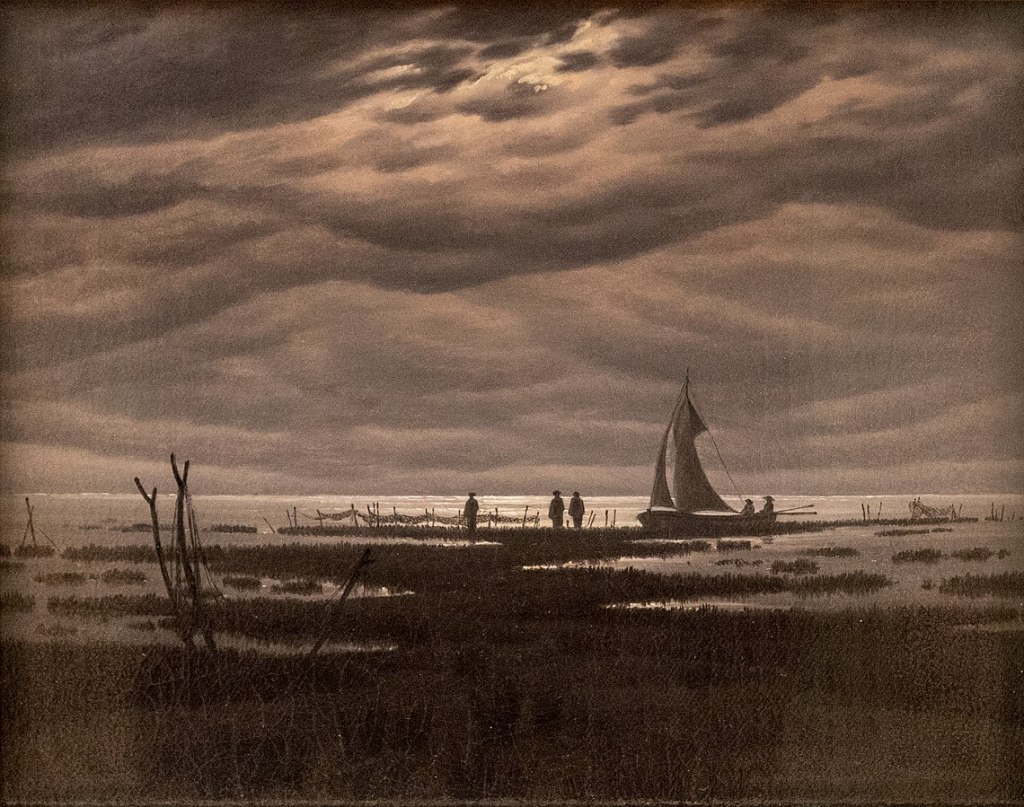
Caspar David Friedrich – Flachlandschaft am Greifswalder Bodden 1816-18

But in a populous country like the Netherlands, in a popular outlook bar like this, on a perfect spot like mine, personal space and integrity are brushed aside. From the corner of my eye, I could see that a company of middle aged Dutch women had finished slurping black coffee. Moreover, they were marching in a fast tempo towards my table. 

The curious company came standing right behind my chair. Some of them were even leaning over me, and started making remarks about the view. Within seconds, I was trapped and surrounded, and forced to listen closely. But their comments were of a different kind than my hypothesis about the Italian or Frenchman. 

They initially exchanged some neutral facts about the city. Then, one lady (while breathing in my neck) questioned the others how the outside windows are cleaned at such heights. That clearly created uproar in the group. Thus, all possible ways of cleaning were discussed thoroughly. Does the cleaning company use a hydraulic hoist or is it all automatized? 

Without conclusion, the subject changed, as one of the ladies spotted an enormous grey building in the distance. Her comment evoked a lively discussion about its function either. Was it the tax office, or the telephone company? Another uproar amongst the practical-minded women followed.

An elderly lady with short grey hair then summed up all the names of all possible places she could reminisce. Her local shopping centre. Her previous bank. A carpet shop where she had bought a carpet. I silently wondered whether they noticed any of the panoramic beauty that presented itself to them.

The answer was no. They returned to discussing which cleaning company might be responsible for this building. Also the presumed expenses were addressed, as if it were a business meeting. After some more practical remarks, they ran out of topics and the babble died down. 

The group shuffled on, leaving me with an entirely different perspective on my hometown’s skyline; Inasmuch as the Italian and Frenchman would picture the world through the artist’s eye, these women have mastered the art of looking through the Dutch eye. 

In five minutes, this group of household women reminded me of a world view I had almost forgotten, but which is intractably inherent to my Dutch ethnicity; First comes practical functionality. And after that, if there’s time, daydreaming and romanticizing is allowed. 

However, an inevitable wisdom hides within this practical philosophy. Although the women were staring a little blind on the methods of cleaning, expenses and city facts, they denuded something of undeniable value: that maintaining things may not always be aesthetic and exciting, and sometimes even boring and dull, but surely unmissable.

Indeed, the magnificent building would look dreadful without adequate cleaning and maintenance. The breathtaking panorama wouldn’t even be visible, simply because of unwashed windows.

The Dutch Eye also applies to other areas of life. When not maintained attentively, the brightest flower would die, the most romantic love relationship would dissolve, and the dearest friendship would fade out.

© Stefan Hoekstra/The Social Writer, 2020. Unauthorized use/and or duplication of this material without express and written permission from the site’s author and/or owner is strictly prohibited. Excerpts and links may be used, provided that full name and clear credit is given to Stefan Hoekstra and The Social Writer with appropriate and specific direction to the original content.     
Two People, One Plane Ticket: An Airport Story

Airports, train and bus stations have in common something peculiar. In these very places, thousands of family members, loving couples and good friends say farewell to each other every day. Sometimes they leave for just a few weeks, but sometimes for an undetermined stretch of time. Some can hardly suppress their emotions and burst into tears, while others shake each others’ hands formally, when the moment is there. In airports in particular, the goodbye has quite a definitive connotation, as aircraft possess the impressive force to increase the margin between two people to thousands of kilometers within a short span of time. 

Especially for border-transcending love, the airport can be an incredibly cruel place. While seeking busily for the right departure hall, a wry feeling of contradiction is slowly taking hold of those who are unwillfully divided by distance or bureaucracy. At the airport, the painful separation feels like a sentence which, moreover, also needs to be executed merely by oneself. It’s an act of self-harm in its purest sense. Unlike a train or bus which drives away irreversibly, the airport separation is done by walking into a restricted area yourself. Simple as that. No dramatic train chasing scene. And for those who haven’t chosen to be apart, the moment comes always a little too early. 

Two souls, one ticket. They’re aware that sooner or later after finding the appointed entrance, they will be disunited. Only one half of the companionship will go, and the other will stay, because the robotic gate refuses anyone without a valid plane ticket. No exceptions are made for sticky love birds. Soon, they will be isolated from each others’ warmth and words. Closeness exchanged for sombre separate compartments of the airport. The automatized doors at the end of a brightly illuminated hall symbolize the unrelenting line between tender closeness and a haunting absence. This clinical environment is the last possibility for a series of tight cuddles and other outings of affection. But on an unspecified moment, it’s reluctantly decided that it’s time to let go. 

Meanwhile walking away, the face of your loved one then slowly disappears amidst crowds of hurrying passengers. Eye contact becomes harder with every step onwards. Non verbal messages are sent to and fro, or whenever the masses allow it. A hopeful smile is directly followed by tears of sadness. 

Stringent border guards show no sign of compassion. On this stage, they don’t even allow a brief hug anymore. They simply enforce the rules, and instruct the confused loved ones to place their items in the right bin. Generally, the fluids are in the wrong sachet with zipper, and because of some change in a pocket, the metal detector suspects a potential hijacker.  

The growing sense of the approaching separation makes every glimpse of each other more lifelike than can ever be compensated by the most advanced ways of communication. Eye contact continues uninterruptedly until it becomes nearly impossible. And then, the frightening automatized doors shut for the very last time. Permanently. 

The by now so familiar feelings of intimacy and adjacency, make way for a prompt feeling of disenchantment and numbness. It penetrates into the consciousness in the form of heavy doubts regarding the decision to say farewell. 

Entirely unjust this is not; all kinds of uncertainties may diminish the chance of a quick reunion. Indeed, through the eyes of the one left behind, the airplane is a flying fuel tank, which will tear through extreme weather conditions at the speed of nine-hundred kilometers an hour, on an altitude of about eleven kilometers. A summary that doesn’t inflict much confidence in terms of safety.  

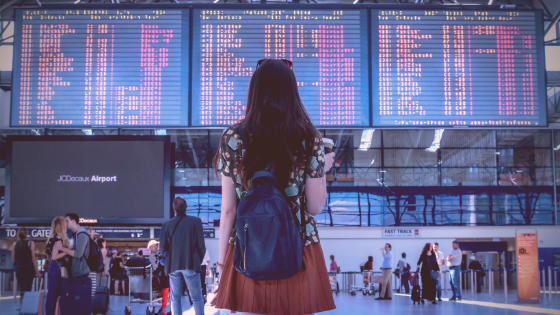
An ordinary sounding announcement on an enormous screen in the hall then declares that the plane in question had departed seconds ago. Upon this, all the available images of all imaginable disasters pass by in the thoughts of the poor straggler. Intense fear overrules all the successful flights and the minimal statistical chance of such a disastrous occurrence. 

Slightly paranoid pictures of a destructive collision between some unattentive geese and the jet engines, or of a mentally unstable co-pilot who decides to steer the aircraft straight into the earth, constantly besiege the mind of the powerless left-behind loved one. Fierce panic attacks are not ruled out. 

Such imaginations continue to persist stubbornly, until the flight control center of the designated airfield announces that flight number BT451 had arrived according to schedule. Merely two hours after taking off, the beforehand so doomed projectile is safely on the ground once again. A grand but short relief for both, afore emotions of a different kind start taking over.

Together in the morning, alone in the afternoon, or conversely. The first hours after the farewell, often in a bus or train homewards, are characterized by a heartbreaking feeling, followed by an endless emptiness. Undiminished contact with your loved one continues on the phone, on which messages of affection and missing carry the ambitious goal to fulfil the void that had appeared. But communication which was previously transmitted through all senses, is now reduced to only a small typepad. It’s just not the same.

Kissing, an utmost delicate and gentle action between two persons. Lips, made of flesh and skin, are now replaced by yellow bald faces without clearly defined gender, who spit out a modest heart. They can be found in a side cabinet of the virtual typepad on modern phones, and can be given out unlimitedly. Still, it is all insufficient to maintain the complex, familiar conversations like before.   

For a moment, the brightly lit train homewards is an unsparing and confronting place. And surrounding you, passengers are occupied by their daily worries, without having any insight into the tormenting affliction you underwent barely two hours ago. Expressing a serious countenance, the other passengers appear to be sheer indifferent towards the invisible wounds. They are focussed chiefly on their smartphones, laptops or tablets.  Hours ago, when they were presumably still attending hideous meetings in the office, the poor loved one was still in a far away land, happily united with his or her dear one. 

The coming time will be characterized by an uneasy feeling. As fast as the aircraft had departed earlier on, as wretchedly slow the first signs of recovery and reconciliation regarding each other’s excruciating absence will unfold in the weeks to come.

Nevertheless, places like an airport have a paradoxical meaning for international love. On one hand, the sterile departure hall functions as a metaphorical torture room, consisting of clinical white walls, automatized doors and hermetically closed security passages and strict employees. 

On the other hand, the arrivals hall fulfills the conciliatory role of of reuniting loved ones after a long divide. Impatient individuals, carrying a bouquet or a written name sign push each other away at the irregularly opening doors. As if it were a factory functioning on full speed, love birds appear from the production line, to be wholeheartedly embraced by their significant others. This time, crying tears of joy. With this, the intense missing might be numbed for some time, until the inevitable separation presents itself again in the near future. A pattern that should ideally not occur too regularly over a brief period of time. 

This story was written in 2018, originally in Dutch. This is an expanded version in English, with additional details.

© Stefan Hoekstra/The Social Writer, 2020. Unauthorized use/and or duplication of this material without express and written permission from the site’s author and/or owner is strictly prohibited. Excerpts and links may be used, provided that full name and clear credit is given to Stefan Hoekstra and The Social Writer with appropriate and specific direction to the original content.     
Mocking Day

It’s the end of the year. For myself, this also means that soon another year of my life will come to a close. In a few weeks, I hope to reach the significant age of twenty-eight years.

It’s the ideal moment for friends and family to tease me with relentless jokes about the increase of my life-span. As though ageing were avertible, and I simply failed in staying young. 

Every year, they congratulate me sincerely, but secretly can’t wait to start bullying innocently; ‘Ha, almost thirty, grandpa!’, ‘Say, are those grey hairs?’ But some take it to an earnest level and still expect a sensible answer; ‘So how does it feel to be kind of old?’

As a consequence, the cheerfulness connected to birthdays might now be circumscribed with a rather cheerless edge. Just another year older. A year further away from my highly praised youth. 

Fundamental to these rather arbitrary jokes, lies the more serious implication that ageing after roughly the age of twenty-five is equal to downright regression. Although birthdays are genuinely a celebration, they are inasmuch as likely to become shrouded under a layer of sadness. With each consecutive year onwards, the birthday celebration is experienced more and more as a burden. An unwanted formality to be avoided when possible.  

Over the years, birthday parties consist majorly out of mocking and teasing the defenceless birthday boy or girl. Adherents sharply point out the unpleasant aspects of ageing, using a dark sense of humour. Which may though, on itself, be quite harmless and even disarming; ‘How’s the retirement home application going?’

But amidst all the comicality, people forget to celebrate something valuable: the survival of another year of existence. Surrounded by true hazards, a life full of realistic dangers, which uninterruptedly threaten our vulnerable and humble human existence.  Misfortune is lurking around every corner.

There are plenty of reminders that disaster can strike at will. Frequently, we are confronted with news reports saying that a contagious epidemic had nearly wiped out an entire village. That a merciless tsunami had taken the lives of hundreds or perhaps thousands of people. Or, that an unlucky young fellow died, after a brook fell on his head while cycling. And way too often, news travels to us about the incurable illness of someone we know.

Considering these gritty statistics, I perceive it to be rather miraculous to soon have survived almost three decades on this planet. Twenty-eight years. Many of us weren’t that fortunate. 

© Stefan Hoekstra/The Social Writer, 2019. Unauthorized use/and or duplication of this material without express and written permission from the site’s author and/or owner is strictly prohibited. Excerpts and links may be used, provided that full name and clear credit is given to Stefan Hoekstra and The Social Writer with appropriate and specific direction to the original content.
Sunday/Zondag

Scroll down for the version in Dutch.

A night in front of the television, a weekday off, or perhaps a well deserved weekend at the beach or in the woods. Nothing on your mind, a moment for yourself. These might be the most characteristic remarks of the moment. And they’re worrying too, for they denude a logic wherein moments of rest are unnecessarily confused with laziness, hence a feeling of guilt. In this contrast, Sundays are a very welcome exception. 

Popular subtexts, alongside vacation pictures on social media intended to pun colleagues at office, often imply that a moment of rest needs to be deserved in some way. Only after an undefined period of consecutive labour, a week of rest is seen as ‘well-deserved’. According to this logic, it’s a misconception that those, who are temporarily or permanently outside the labour market would be reluctant towards work, or perceive their situation as ‘easy’. Nonetheless, also their hard working counterparts, fortunate enough to enjoy a successful career, wouldn’t be able to escape it. Also they experience a likewise state of restlessness, just like a truant who cannot gratify his obtained freedom in a worriless way. 

To focus a little closer on the described phenomenon, imagine yourself the main character in the following story.

It’s an ordinary wednesday morning, somewhere in february. Outside, it is chilly and unpleasant. Fierce rain is battering the windows relentlessly. The sun won’t show itself today, that much is certain. Around six o’clock in the morning, most citizens are starting to pave their way to their job places. From students to construction workers, they all share a collective goal; being on time. Rush hour, generally between eight and nine, makes account for the climax of this hasty scene. 

Even with windows firmly closed, the awakening of society is well hearable. A continuous background noise, coming from heavy traffic on a nearby motorway completes the abundance of sounds. Some people take the public transport. Other, less fortunate souls are hurrying by car, only to subsequently merge into a sluggish traffic jam. Children biking to school have to endure a harsh headwind while cycling for thirty minutes. Experience teaches that the same wind turns one-hundred-and-eighty degrees, just to make the ride homewards similarly unpleasant. 

It’s little before ten o’clock in the morning, the crowded bustling in the streets had somewhat lessened, after which calmness is slowly returning. Intersections are accessible once again, and the traffic jams are gently dissolving. The frequency of bus services is temporarily bisected. For about eight hours, the streets are subject to relative tranquility, until all the turmoil will commence anew in the evening. This time, all sharing the collective goal to be home on time, while food deliveries are roaming the streets.

But you didn’t notice anything of all this hassle. All this time, you were tucked away in a warm bed. Only now, you’re stumbling towards the kitchen to silence the unbearable hunger which is tormenting you. Without a clear reason, you return to bed a few times. A little surly, you’re mumbling sleepily something which sounds like ‘’what are they all doing that for..’’

Normally speaking, today’s agenda would be filled with appointments and meetings, but now there are no such obligations. While you just started brushing your teeth around noon, corporations around the corner already made deals worth millions. Elsewhere in the city, numerous students have had their first lectures. You’re well-aware of that. And despite their misery around daybreak, they’re at least exculpated from agonizing feelings of guilt. Indeed, it is not fair that others sacrifice their morning to keep economy running. The reasoning goes that another employee needs to work twice as hard, just to make up for your absence today.

Holding a cup of tea in your hand, you plunge into a comfortable chair next to the window, with a view over the adjoining street. Loud street workers are reminders that the working day is in full progress. The poor souls that are your colleagues weren’t refrained from the relentless downpours this morning, and are now drying up during a spine chilling meeting about the marketing strategies for the coming months. In spite of being exempted from all this dread, there are nonetheless mixed feelings. In an attempt to escape them, it is wishful to undertake something productive. Anything.

The apartment had been thoroughly cleaned just days beforehand. Only yesterday, it was vacuumed. But even so, it doesn’t retain you from doing another round around the living room, for unused time seems to be lost time. The lazy moment in front of the window didn’t last long. Merely seconds later, you open the laptop, to catch up on some overdue work. By doing this, the pressing feeling of uselessness is upheaved. Yet, another rare and valuable moment of peace had dissolved into oblivion. 

How often do you hear people say; ‘now I should really start doing something’. What’s the origin of this pushy remark? The feeling of guilt is one of the thriving forces, fundamental to the success of a capitalistic economy. This unpleasant feeling exists when potentially productive time stays unused. And it can be diminished directly when something is being undertaken, preferably in return for salary or another form of payment. Economically seen, this is a tremendously effective mean. A tortuous feeling of discomfort and dissonance can occur to you on moments which are experienced as inefficient. Activities not seen as productive, add up to this feeling of guilt towards the hard working society. Presumptively, all the others are, as said earlier, working hard to keep economy going. 

Classical sociologist Max Weber finds an explanation in calvinism. This is a variant of protestantism, which is based upon obtaining grace and with this, release from guilt. Working hard is a virtue, and will eventually lead to redemption. Accordingly, you will be granted permission to enter heaven. In other words; as long as you work hard enough, it might enable you to transcend the inevitability of death. In part, it possibly explains why northern economies are amongst the stronger ones globally. But unfortunately enough, it is responsible for an equal or exceeding amount of depressions and sorrows, related to this self inflicted kind of work pressure. 

Also, not everything can be ascribed to receiving a high salary, because ironically, salary has a lower priority than cancelling out the aforementioned feeling of guilt. Most people work much more than is required for basic human needs. The old antecedent of guiltiness – christianity- appeared to be an utmost important mean to sustaining economy, despite having forgotten of its other advantages such as calmness and peace of mind. And that has severe consequences; burn-outs have been topping the charts of prominent psychological issues. 

There are only a few moments during the week, on which it is nowadays allowed to enjoy free time, liberated from the feeling of guiltiness. And that’s also thanks to our religious past: Sunday.

Sunday. This is a day unlike the others. The heavy background noise of traffic in the distance has diminished. Streets are somewhat accessible, and shortly deprived of any noisy street workers. The absence of sound is noticeable everywhere. Just for a brief moment, it appears that economy took some space to breathe. But in contemporary times, the short break is unfortunately only serving the purpose of regaining strength for another week of competitiveness. 

Quite saddening, the break doesn’t serve the genuine gratification of calmness that it deserves, but is merely a recharging moment in disguise, just to be even more competitive afterwards. And to a worrying extent, the soothingness of Sunday is under siege, as the desire for limitless shopping is increasing. After a brief moment of calmness, large grocery stores start opening their gates, to unleash masses of needy consumers who were already impatiently waiting. Frequently throughout the day, big, noisy lorries unload their content to keep the customers fulfilled. The necessary distinction between Sunday and ordinary days is fading slowly. To still find solace on a Sunday afternoon, a getaway to the forest or countryside might be more alluring.  

But moments of genuine rest and reflection which might occur on a calm Sunday are becoming ever more scarce. Henceforth, some are ultimately sentenced to lay down work because of a work related depression as a consequence of our 24/7 economy, still fuelled by feelings of guilt. 

Sociologist Hartmut Rosa explains that acceleration of social processes are responsible for a growing desire to slow down. This is one of the unintended consequences of our endless endeavour toward efficiency and therewith lowering the expenses. People have more time saving technologies than ever before, yet ironically there has never been as little time available, as now. The expansive possibilities to communicate carry with them that labour isn’t limited to merely office hours. Contact between supervisor and employee reach out far into private life. The bounds, keeping apart private life and work, are subject to an increasing vagueness. An innocent message about a prospective meeting or some overdue work is easily sent, and can ostensibly do not much harm.

For most people, monday morning may be the week’s least favourite moment, exactly because just twelve hours earlier, everything was so different. Monday is perhaps comparable to this one colleague who, during the break, cannot wait to start working again. Sunday might be more similar to this one psychologist who emphasises for you to really slow down now. 

This essay was initially written in Dutch, in September 2018. That original article is placed underneath. It has been translated by myself into English in November 2019.

***

Zondag

Een avondje voor de televisie of een doordeweekse snipperdag, of wellicht een welverdiend weekend aan het strand of in de bossen. Even helemaal niks, een moment voor jezelf. Het zijn misschien wel de meest kenmerkende uitspraken van dit moment. En zorgelijk zijn ze ook in bepaalde zin, want ze leggen een logica bloot die essentiële rustmomenten onnodig verwart met luiheid. Zondagen vormen een verademende uitzondering.

Populaire bijschriften wanneer vakantiefoto’s door middel van sociale media worden gedeeld of naar collega’s worden verstuurd, impliceren meestal dat een rustmoment verdiend moet worden. Pas na een ongedefinieerde periode van aaneengesloten werken, is een weekje vakantie ‘welverdiend’. Volgens die logica is het een misvatting dat degenen die tijdelijk of permanent buiten de arbeidsmarkt vallen, onwelwillend tegenover werk zouden staan of hun situatie als gemakkelijk beschouwen. Niettemin zal ook het overgrote deel van de samenleving, de fortuinlijken met een succesvolle carrière, er niet aan ontkomen. Zij ervaren net zo goed de rusteloze gemoedstoestand, zoals een spijbelaar die niet zorgeloos kan genieten van de verkregen vrije tijd.

Het is een doorsnee woensdagochtend, ergens in februari. Buiten is het guur en onaangenaam. IJzig koude regen slaat genadeloos tegen de ramen. De zon zal zich niet laten zien vandaag, zoveel is duidelijk. Rond zes uur in de ochtend beginnen de eerste mensen zich een weg te banen door het vreselijke weer, op weg naar verschillende werkplekken. Van studenten tot bouwvakkers tot ambtenaren, allen hebben ze hetzelfde doel; op tijd zijn. Het spitsuur, meestal tussen acht en negen, vormt het hoogtepunt van dit haastige tafereel.

Zelfs met gesloten ramen is het goed hoorbaar dat de samenleving ontwaakt. Een constant achtergrondgeluid van vrachtverkeer op de omringende snelwegen vult het geheel aan. Sommigen nemen het openbaar vervoer, en minder fortuinlijke zielen haasten zich met de auto om vervolgens deel uit te maken van een schoorvoetende file. Schoolkinderen fietsen een half uur lang met tegenwind naar school. De ervaring leert dat de wind daarna honderdtachtig graden draait, klaar om de terugrit eveneens onaangenaam te maken.

Tegen tien uur in de ochtend is het gedruis en gedrang in de straten wat verminderd en keert de kalmte zachtjes terug. De kruispunten zijn weer enigszins toegankelijk en de ontstane verkeersopstoppingen lossen zich langzaam op. De interval op het schema van stadsbussen en tramlijnen halveert. Ongeveer acht uur lang zal er relatieve rust heersen, totdat alle commotie rond vijf uur opnieuw begint. Ditmaal met het collectieve doel om op tijd thuis te zijn, met de uitzondering dat dan ook haastige (soms opdringerige) bezorgdiensten deel uit maken van de krioelende massa op straat.

Maar van dat alles kreeg jij weinig mee. Je lag al die tijd in een warm bed, en strompelt nu al gapend richting de keuken om de inmiddels ondraaglijke honger te stillen. Zonder goede reden keer je daarna nog enkele keren terug naar bed. Ietwat humeurig mompel je half slaperig iets wat klinkt als; ”waar doen ze dat allemaal toch voor..”

De agenda staat normaal gesproken vol met werkafspraken en vergaderingen, maar dit is een vrije dag. Vandaag hoeft er niks. Terwijl je rond twaalf uur in de middag net de tanden poetst, zijn er in kantoorgebouwen om de hoek al miljoenendeals gesloten, is elders in de stad een nieuwe snelweg voltooid en hebben studenten hun eerste colleges gehad. Daarvan ben je je goed bewust. Maar ondanks de file ellende bij dageraad, zijn zij in ieder geval allemaal vrijgepleit van schuldgevoel. Na een periode van aaneengesloten werken, zou deze vrije dag welverdiend moeten zijn. Maar geleidelijk aan bekruipt je toch een onprettig gevoel. Eigenlijk is het niet eerlijk dat anderen hun ochtend hebben opgeofferd om de economie welvarend te houden. Iemand anders moet nu twee keer zo hard werken om jouw afwezigheid recht te trekken, is de redenering.

Met een kop thee neem je plaats in een luie stoel, met uitzicht over de aangrenzende straat. Luidruchtige straatwerkers herinneren je eraan dat de werkdag nog in volle gang is. Je arme collega’s zijn niet gespaard gebleven door de hevige regenbuien van vanochtend en zitten nu op te drogen in een saaie vergadering over de marketingstrategie voor de komende maanden. Ondanks dat jou dit bespaard blijft, en je zelfs nog een treiterend bericht naar hen stuurt, is er sprake van gemengde gevoelens. Om hieraan te ontkomen, is het wenselijk iets productiefs te ondernemen. De woning is kortgeleden nog grondig schoongemaakt en gisteravond is er nog gestofzuigd. Toch weerhoudt je dit niet van een extra ronde met de stofzuiger, want onbenutte tijd is verloren tijd. Het kalme moment heeft uiteindelijk niet lang geduurd. Slechts enkele momenten later wordt de laptop geopend, om wat achterstallig werk te voltooien. Het prangende gevoel van nutteloosheid is hiermee tijdelijk opgeheven. Niettemin is er wederom een belangrijk rustmoment verloren gegaan.

Hoe vaak hoor je mensen wel niet zeggen; ‘nu moet ik toch echt wat gaan doen’. Maar waar komt deze opdringerige gedachte vandaan? Schuldgevoel is een van de drijvende krachten achter de kapitalistische samenleving. Dit nare gevoel ontstaat wanneer potentieel productieve tijd onbenut blijft. En het kan direct opgeheven worden zodra iets ondernomen wordt, bij voorkeur tegen betaling of salaris. Dit is economisch gezien een doeltreffend mechanisme. Een onbehaaglijk gevoel van dissonantie kan zich manifesteren op momenten die als inefficiënt worden ervaren. Activiteiten die als onproductief worden gezien dragen bij aan dit vervelende gevoel van schuld tegenover de hardwerkende maatschappij. Alle anderen offeren immers hun vrije tijd op om de economie draaiende te houden.

De klassieke socioloog Max Weber legt de oorzaak ervan grotendeels bij een economische implementatie van het calvinisme. Een religieuze stroming die grotendeels gebaseerd is op het verkrijgen van vergiffenis en daarmee op het gevoel van schuld. Als je maar hard genoeg werkt word je door God vergeven, en op die manier verkrijg je toegang tot de hemel. Met andere woorden: het zorgt ervoor dat je de onvermijdelijkheid van de dood misschien beter kunt verdragen als je maar hard genoeg werkt. Dat verklaart wellicht waarom noordelijke landen een overwegend en relatief sterkere economie hebben. Maar onfortuinlijk genoeg een evenredig of overstijgend aantal depressies en klachten gerelateerd aan deze zelf opgelegde werkdruk.

Ironisch genoeg heeft salaris in deze zin een lagere prioriteit dan het opheffen van dit schuldgevoel. Velen werken immers (veel) meer dan nodig is voor een aangename levensstandaard en de menselijke basisbehoeften. De oude drijfveer van schuldgevoel, het christendom, blijkt een uiterst doeltreffend middel voor de Nederlandse economie, ondanks dat we haar andere belangrijke voordelen zoals kalmte en structuur zijn vergeten. En dat heeft gevolgen.

Er zijn maar een paar momenten in de week waarop het tegenwoordig mogelijk is om in harmonie met je gevoelens te genieten van vrije tijd. En ook die hebben we te danken aan ons religieuze verleden. Zondag. Dit is geen vrije dag zoals alle andere. De achtergrondruis van vrachtverkeer is sterk afgenomen. Straten zijn voor korte tijd verlost van rumoerige constructiewerkers (met uitzondering van sommige fanatieke doe-het-zelvers, die het de perfecte dag vinden voor het uitproberen van nieuw oorverdovend gereedschap.)

Kalmte dient zich nu aan in de vorm van stilte, die overal merkbaar is. Het constante gebrul van de snelweg is absent en de straten zijn enigszins begaanbaar. De afwezigheid van geluid is overal hoorbaar. Voor even lijkt het alsof de doorrazende economie een broodnodige adempauze heeft ingelast. Maar de korte onderbreking dient helaas vooral om zich weer op te laden voor een nieuwe week competitie van concurrerende economieën, en jammerlijk genoeg in mindere mate om oprecht de waarde van kalmte te ervaren. Het is geen feitelijke verlangzaming, maar een verhulde adempauze die dient om daarna nóg productiever te worden. Sommigen worden door hieruit voortkomende tekenen van depressie veroordeeld tot het neerleggen van werk, zoals bij een burn-out.

Volgens socioloog Hartmut Rosa zorgt de acceleratie van maatschappelijke processen voor een toenemend verlangen naar perioden van verlangzaming. Dit is een van de onbedoelde gevolgen van het eindeloze streven naar efficiëntie en daarmee kostenbesparing. De mens heeft meer tijdbesparende technologieën dan ooit tevoren, toch werd er nooit zoveel tijdgebrek ervaren als nu. De vele mogelijkheden tot communicatie brengen met zich mee dat de arbeidsethos zich niet meer beperkt tot kantoortijden. Contactmomenten tussen leidinggevende en werknemer reiken tot diep in het privéleven. De vervaging van de grens tussen privé en werk is al enige tijd onderweg. Een onschuldig berichtje over een vergadering of achterstallig werk is immers snel en makkelijk, en kan (ogenschijnlijk) weinig kwaad.

Maandagochtend is voor velen het minst favoriete moment van de week, juist omdat het slechts een etmaal terug allemaal zo anders was. Maandag heeft de ondankbare taak om de economische pauze tot een abrupt einde te brengen. Wellicht is Maandag vergelijkbaar met die ene over-enthousiaste collega die tijdens de lunchpauze het werk niet snel genoeg weer op kan pakken. Zondag toont wellicht meer gelijkenis met die ene psycholoog die nog eens extra benadrukt dat je het toch echt wat rustiger aan moet gaan doen.

© Stefan Hoekstra/The Social Writer, 2019. Unauthorized use/and or duplication of this material without express and written permission from the site’s author and/or owner is strictly prohibited. Excerpts and links may be used, provided that full name and clear credit is given to Stefan Hoekstra and The Social Writer with appropriate and specific direction to the original content.
Insights in Sofia

We had walked half the city to ultimately arrive at one of Sofia’s most prominent buildings; a grand orthodox church. Upon witnessing the mighty structure, my respiration stifled slightly. Its tremendous golden roof caught our attention at once. The surroundings consisted of a newly asphalted large parking lot, so we needed to criss cross through an abundance of cars before finally reaching the entrance.

Shortly after entering, we sat down on a wooden bench and sighed. For some time, we witnessed the ongoing rituals until I got drawn into some sort of reverie. Of a sudden and without being fully aware of it, the following phrase escaped my mouth;

“I’m feeling nostalgia for times in which I never lived.”

The comment awoke a curious look in my girlfriend’s eyes. She instantly nodded in an understanding way, confirming the recognizability of my remark. Somehow or another, it made sense. I desperately wanted to be, even for just a day, living in the times that this church reflects.

Untraceably, this thought surfaced somewhere in my consciousness, coming from the unknown depths of my psyche. Precisely at the moment when the main priest went around the hall to spread around incense smoke, I felt an abundance of unexplainable melancholy, hence the need to inform my girlfriend. I suspect it was the scent which triggered it. 

Either way, it was just a matter of time before such melancholy would strike me, as lately I find myself drawn more and more towards ancient places. In particular old churches and cathedrals, regardless of the religious stream they might embody. Whenever the door is ajar, I aim to slip inside and enjoy its tranquility and order. For me as being not officially religious, such places are beginning to fulfill a more transcending role against modern difficulties. It’s most certain that the value of old churches is not restricted to merely tourists or the religious. 

Imposing environments like these feel growingly like a safe haven, a sanctuary as it were. A place with a low pace. The origin of this feeling seemed disguised and hidden deeply in an ancestral past. It presented itself in a fierce longing for the centuries far before I was introduced to this world. As if I were accidentally born in the wrong times. 

From the wooden bench, we observe the authentic, magnificent columns and impressively decorated ceilings. We witness the simplicity of a priest taking his time to light candles for the remembered and the forgotten, while the low soothing voices of a male chorus echo gently throughout the hall. Visitors, on the other hand, remain silent. Distracting gadgets are seen only sporadically. Every visitor, tourist or local, appears to be well aware of the unspoken commandment in such places and respect them. 

Altogether, the patient and attentive atmosphere infatuated a strong desire for an unknown but desirable past. One beyond the recordings of my memories. It all reminds me of a life I would probably never live. Anyway, it would be sheer impossible during my brief but already stressful and competitive existence. Surely it’s something I (and maybe others) lack of nowadays. 

The serene ambience of these places exposes painfully precise what we have been neglecting in modern societies. Retreats in this form have become a rarity, but are ironically needed more than ever. Over the years, spirituality, calmness and moralism became increasingly replaced by overconsumption and demoralisation. 

Simultaneously, the warmth and inclusiveness that might have existed in the centuries prior to ours, had vanished over the years. Caught up in the obsession of economic development, we have left behind a valuable past and have forgotten some of its advantages along the way. We have simply thrown away the baby with the bathwater. Luckily, some old churches and cathedrals have withstood the test of time, to show us it wasn’t always like this. In the weakly lit halls of ancient churches, the neverending fixation on work and consumption is outweighed by human kindness and patience.

In this sense, priests and clerics fulfil an essential role. They demonstrate to us the necessary attitude when it comes to downshifting from a fast and chaotic towards calm and orderly mindset. For instance, taking the time to light two-hundred candles in remembrance of the dead, is a lengthy ritual. Nonetheless it is likely to be one out of few daily tasks to be fulfilled by this holy man. The devotion given to merely one task simply doesn’t merge with the contemporary lifestyle anymore. In contrast to these disciplined priests, our daily tasks have multiplied endlessly, but the devotion (or possibility) to finish them has weakened.

Today, numerous social contacts are expected to be maintained, next to functioning flexibly and eagerly at work. Essential life aspects have been transferred to the online world. But this is a world without clear limits and borders. And most of all, an unstoppable world that constrains time and pushes it far beyond the limits of our mental and physical abilities. Eventually, this unframed way of living is often halted by what we call a burn out. Likewise, spirituality and devotion have lessened, as they became subject to the hastiness of our time consuming society. 

It might, from this perspective, be pleasant to daydream of the times we have missed out on. Even if the picture is not quite accurate in our fantasies. Old buildings like a cathedral appeared the ideal practising grounds to do so. To deprive yourself from technological gadgets and step into a hall of calmness, dreamily depicting the lives of people before highly developed technology. When spirituality was more apparent. Times when sorrows were diminished by prayers and philosophy instead of prescribing pills. When the world’s population was far under a billion, while borders and bureaucracy were absent for the most part. Things were yet a little more undetermined. 

Amidst the chaotic and unorderly world of today, old and dusty churches can make you feel serene, and offer solace. Yet, castles or other ancient places might provoke similar mental refreshment. I hope that these sanctuaries of existential guidance will withhold far into our doubtful future. For everyone. Not as a beacon of religious divide, but as a modest hideaway from our evermore accelerating society.

© Stefan Hoekstra/The Social Writer, 2019. Unauthorized use/and or duplication of this material without express and written permission from the site’s author and/or owner is strictly prohibited. Excerpts and links may be used, provided that full name and clear credit is given to Stefan Hoekstra and The Social Writer with appropriate and specific direction to the original content.

Afscheidsplaatsen

Luchthavens, trein- en busstations hebben iets eigenaardigs gemeen. Duizenden familieleden, geliefden en goede vrienden nemen er dagelijks afscheid van elkaar. Soms voor een paar weken, soms voor onbepaalde tijd. Sommigen kunnen de tranen nauwelijks bedwingen en anderen schudden elkaar zakelijk de hand, wanneer het moment daar is.

Op luchthavens in het specifiek, heeft het afscheid doorgaans een definitief karakter. Vliegtuigen hebben immers het indrukwekkende vermogen om de marge tussen twee zielen in korte tijd te vergroten tot duizenden kilometers, terwijl vliegtuigmedewerkers je loten proberen te verkopen van dubieuze buitenlandse kansspelen.

Voor geliefden in het bijzonder is de luchthaven een wrede plek. Al druk zoekend naar de juiste vertrekhal bekruipt hen een wrang gevoel van tegenstrijdigheid. Het pijnlijke loslaten voelt namelijk als een vonnis, dat ook nog eigenhandig voltrokken moet worden. Snel na aankomst zullen zij zich in aparte ruimten bevinden. De automatische deuren aan het eind van een fel belichte vertrekhal symboliseren de onverbiddelijke grens tussen distantie en nabijheid. Deze klinische omgeving is de laatste plaats voor een reeks omhelzingen en andere uitingen van affectie.

Op een ongespecificeerd moment wordt besloten dat het tijd is om te vertrekken. Tijdens het weglopen verdwijnt het gezicht van je geliefde dan langzaam tussen massa’s haastige reizigers. Oogcontact met elkaar wordt steeds moeilijker. Streng toekijkende douanebeambten geven geen blijk van geen mededogen. Op dit punt laten ze zelfs een korte omhelzing niet meer toe. Zij hanteren zorgvuldig de regels, en manen de afgeleide afscheidnemers hun attributen in de juiste bak te plaatsen. Want de vloeibare middelen zitten doorgaans in het verkeerde type plastic zakje met zipsluiting, en door wat overgebleven muntgeld in de broekzak ziet de metaaldetector je als een potentiële vliegtuigkaper.

Maar het groeiende idee van de aanstaande distantie tussen beiden maakt elke kortstondige glimp van je beminde levensechter dan het meest geavanceerde communicatiemiddel kan compenseren. Onafgebroken oogcontact zet zich voort totdat het simpelweg niet meer mogelijk is, en de geautomatiseerde deuren onherroepelijk dichtvallen.

De inmiddels zo vertrouwde gevoelens van genegenheid en geborgenheid maken abrupt plaats voor desillusie en verdoving. Dit dringt tot het bewustzijn door in de vorm van hevige twijfels over de juistheid omtrent de beslissing van dit vaarwel.

Helemaal onterecht is dit niet; allerlei onzekere factoren beïnvloeden de kans op een (snel) weerzien. Vanuit het perspectief van de geliefde is het transportmiddel immers een vliegende kerosinetank, die met ruim negenhonderd kilometer per uur, op elf kilometer hoogte, door extreme weersomstandigheden zal razen. Een opsomming die weinig vertrouwen ontlokt.

Een droge mededeling op een enorm scherm in de hal duidt vervolgens aan dat het betreffende vliegtuig is opgestegen. Niet alle duizenden probleemloze vluchten, maar juist de dramatische beelden van mogelijke rampscenario’s treden direct op de voorgrond bij de machteloze achterblijver. Lichtelijk paranoïde beelden van een allesvernietigende confrontatie tussen de straalmotoren en wat onoplettende ganzen, of van een mentaal instabiele copiloot die het vliegtuig de grond injaagt, passeren met regelmaat de gedachten. Paniekaanvallen zijn niet uitgesloten.

Dergelijke voorstellingen houden stug aan totdat de verkeerstoren de ontnuchterend zakelijke melding maakt dat vluchtnummer BT451 volgens dienstregeling is aangekomen. Amper twee uur na het opstijgen staat het vooraf zo gedoemde projectiel weer veilig aan de grond.

In de ochtend samen, in de middag alleen, of andersom. In de eerste uren na het afscheid, meestal in de trein of bus, volgt een hartverscheurend gevoel van eindeloze leegte. Het contact met je geliefde gaat onverminderd door op de smartphone, waarbij berichten van affectie en gemis het ambitieuze doel hebben die leegte op te vullen. Maar de communicatie die eerder nog via alle zintuigen verliep, is nu gereduceerd tot een vakje waarin tekst geschreven kan worden.

Zoenen, een uiterst delicate en zachtaardige handeling tussen twee personen. Lippen van vlees en bloed, zijn nu vervangen door oncharmante kale, gele gezichtjes zonder geslacht of duidelijke etniciteit die een hartje uitspuwen. Ze zijn te vinden in een zijvakje van het virtuele toetsenbord op je telefoon en kunnen ongelimiteerd worden uitgegeven. Maar het is allemaal ontoereikend voor het voeren van de complexe, vertrouwde gesprekken zoals voorheen.

De fel verlichte trein is voor even een onverbiddelijke en confronterende omgeving. Om je heen zijn mensen druk met alledaagse bezigheden, zonder enig inzicht te hebben in de kwellende pijniging die je net bent ondergaan. Serieus ogende medepassagiers verhouden zich onverschillig ten opzichte van jouw onzichtbare wonden. Ze richten zich bijna onafgebroken op hun telefoon, laptop of tablet.

Uren geleden, toen zij nog in tenenkrommende werkbesprekingen zaten, bevond de arme afscheidnemer zich nog op vreemde bodem, verenigd met zijn of haar dierbare. De komende weken kenmerken zich door een onwennig gevoel. Zo snel als het vliegtuig de separatie vermenigvuldigde, zo tergend langzaam ontvouwen zich de eerste vage tekenen van berusting met de vretende absentie van je geliefde.

Plekken zoals een luchthaven hebben een paradoxale betekenis voor grensoverschrijdende liefde. Enerzijds functioneert de steriele ambiance van de vertrekhal als spreekwoordelijke martelkamer van het vliegveld, met haar klinisch witte muren, dichtklappende deuren en hermetisch afgesloten controleruimte met strenge medewerkers.

Daarentegen vervult de aankomsthal de genoeglijke rol van hereniging. Ongeduldig ogende individuen met bloemen of een naambordje verdringen elkaar bij de onregelmatig openslaande deuren. Alsof het een fabriek is die op volle toeren draait, rollen de gearriveerde geliefden van de productielijn. Het gemis is hiermee voor de komende tijd wellicht gedempt, totdat het schrijnende afscheid zich in de nabije toekomst wederom zal aandienen. Een patroon dat zich in een kort tijdsbestek maar beter niet te veel kan herhalen.

© Stefan Hoekstra/The Social Writer, 2019. Unauthorized use/and or duplication of this material without express and written permission from the site’s author and/or owner is strictly prohibited. Excerpts and links may be used, provided that full name and clear credit is given to Stefan Hoekstra and The Social Writer with appropriate and specific direction to the original content.

Lidia’s Wisdom

Babushka Lidia is a woman of extraordinary strength. At the imposing age of eighty-two, she lives a physically intense life in a wooden cottage, some twenty kilometers away from the closest city. Apart from the occasional resupply by family, she is largely self sufficient. Whenever I’m residing temporarily in Russia, a visit to this admirable woman guarantees to become a highlight. This piece of writing is a devotion to her and many other brave elderly.

With three delicate kisses on the cheeks and a tight yet gentle hug, Babushka Lidia ensured me a pleasant farewell. It meant saying an indefinite goodbye to a very remarkable person. After reassuring her of our return, I tumbled down the small stairs and found myself in the characteristic living room. Its low ceiling (confirmed by a fierce headache) and squeaking floor supplied me with a last warm, cozy embrace. 

As we walked across the yard towards the adjoining dirt road, Lidia peeked out of the window once more, with a soothing smile. A glance of reconciliation. Upon embarking the car, we waved back and set off. Within moments, Lidia was out of view. And so was her tiny, two floor cottage. Or, as it is called in Russia; her Datcha. The weakly illuminated window of it, reduced swiftly into a modest dot in the darkness. 

Just a stroll away from this fairy tale place, lies a dense forest full of tall pine trees. Pointy treetops outline the horizon. This captivating panorama reaches out far into the distance. The house is encircled by a stretch of cultivated land, wherein Lidia grows potatoes, tomatoes, peppers, paprika, cucumbers, zucchini and so on. Often, her skillful and persistent way of farming leads to a surplus of food. She then calls out for family to pick up some of her harvest. For us back in the city, her insurmountable production levels generally lead to another week of zucchini and potatoes for dinner.

Every summer, Lidia can be found here, shovelling land and practicing other kinds of complicated agricultural labour (of which I don’t possess the slightest knowledge). All the desperate attempts of family to re-establish her into her city apartment were unsuccessful. Only in the relentless Russian winter, when snow and ice begin to obstruct the farming, she relocates reluctantly to the city, just to return the very next spring. 

Lidia was a child during WWII. And in her turbulent youth, she fell into the hands of the Germans and was banished to a labour camp. And so were her sisters and parents. She had told us that at times, there were not much more than a few crumbs of bread to eat. This bitter epoch of scarcity lasted until far after wartime. Oftentimes, she was expected to overcome about twenty kilometers on foot towards the nearest settlement, in order to obtain a negligible amount of groceries. If any groceries at all. 

On the worst of days, she returned home empty handed. Besides, the journey was not without hazards, as it crossed dense forests covered in snow, inhabited by bears and wolves. And if that is not enough, the temperatures during those risky ventures dropped regularly to far below zero. Additionally it’s worth mentioning that her shoes, if you could call them so, were made of plain cardboard. 

In the subsequent decades of her life, she worked, as many women did during soviet times, in an enormous plant. As chief of the factory kitchen, she had thousands of hungry labourer’s mouths to feed. Perhaps it’s a plausible explanation for her superb farming productivity nowadays. Over ten years ago, she lost her beloved husband. They had been married for over fifty years. Lidia has been grieving ever since.

To this day, she misses him undiminished. In speech and ritually, she pays homage to him. More recently, Lidia had suffered from a variety of cardiovascular problems, for which she underwent multiple surgeries. And the list of alike intriguing life events continues endlessly. Nevertheless, it couldn’t withhold her from residing in the cottage once again, irrigating plants and shovelling land with a fulfilled smile on her face.  

When trying to understand her life’s narrative, the significance of it becomes evident. She overcame miseries, nearly incomprehensible for youngsters like me. During a pleasantly melancholic conversation with her, it struck me that, as I looked into her dark green eyes, I was looking into a bittersweet past. Lidia had felt and seen anything that induces anyone with loads of anxiety.

During the lengthy talk with her, I promptly realized something peculiar. The curious eyes I was making contact with, stood once face to face with German camp wardens. Next to this, intense surgeries, grieving over the dead, thirty years of working in a factory, starvation and numerous other sorts of dismay bashed upon her life. To the same extent however, she had felt affection and tenderness. Either from a loving family, children or a good husband. Henceforth, her family’s astonishing solicitude still keeps her warm in times of distress, like a thick blanket during the harshest Russian winters. 

Considering this, I reckon that being in Lidia’s proximity offered me some sort of immunity against any problem, even though I’m nearly twice as tall and still have my teeth. Her carefree expression made me feel safe from harm. Her impregnable wisdom and persistence instilled me with loads of consolation. Without a doubt, I felt protected by this eighty-two-year-old woman.

It felt as if her eventful past reduces the anxiety about the uncertainties of my future. There will be difficulties, tragedies, grief and the occasional headache. But to a similar extent, moments of beauty, growth and love will present themselves. What matters is that you perceive life’s inevitable stages with gratitude. And later on, like Lidia, with a healthy dose of melancholy. Preferably when harvesting potatoes from the meadows, accompanied by an unconcerned but wise smile on your face. 

Lidia’s contentment contradicts profoundly with the busy lives some contemporary people chase. Millennials, for example, need to do skydiving, visit the Bahamas, do an Arctic expedition, climb the career ladder before there’s no more time. Or visit all the countries in the world, and simultaneously maintain a glorious love life. All before the interlude of life’s final phase. It’s likely that these ambitions are born out of pure fear for mortality, rather than unfolding from a genuine, congruent desire to accomplish them. 

Some want to complete this list of accomplishments before it’s all over. ‘You only live once’ is a popular philosophy, which is, of course, undeniably true. You do live only once. Nonetheless it contains a counterproductive element. Its definition emphasizes unwittingly the things we haven’t done or experienced in our brief existence, rather than cherishing and gratifying life’s tests we’ve gone through already. 

In an ironical way, it’s chiefly the elderly people like Lidia, who appear the most serene with the idea of our imminent mortality. For they are already soberly familiar with life’s misfortune and its sorrows. Lidia and many other elderly prove that it’s important to grow old solving life’s phases in an accepting way.  Not full of envy or regret about the things we haven’t done or achieved, but content with the suffering and grateful for any granted moments of sublimity. 

There is another, more mind-broadening aspect to be learned from Lidia’s story. It’s quite often discussed theoretically by existentialists such as Viktor Frankl and Irvin Yalom. And more fundamentally by philosophers like Søren Kierkegaard, whose ideas are now anything but outdated. In the finely inverted words of Kierkegaard:

Life can only be understood backwards; but it must be lived forwards

These thinkers underline the correlation between depression and the fear of getting older. This is undoubtedly connected to nowadays obsessive emphasis on youthfulness in Western countries. But also to the aforementioned ‘you only live once’ construction, which actually implies ‘you’re only young once’. Our juvenile time is seen as the worthiest part of life, wherein people are at their best, only to thereafter descend into a long, boring epoch of old age. This alleged long stretch of regression, leaves no room for further development.

In spite of this, talking to Lidia made me envy her calmness and wisdom. Though ambiguously, it denuded my abundance of fear for the unpredictable future too. She has the advantage of being familiar with life’s unavoidable difficulties, while I as a young adult, still need to find ways to transcend them. Harsh lessons are awaiting me. But Lidia’s glance from the small window and her bittersweet stories all instilled me with resilience towards the unforeseeable future. 

Lidia

© Stefan Hoekstra/The Social Writer, 2019. Unauthorized use/and or duplication of this material without express and written permission from the site’s author and/or owner is strictly prohibited. Excerpts and links may be used, provided that full name and clear credit is given to Stefan Hoekstra and The Social Writer with appropriate and specific direction to the original content.